How Organoids are Revolutionizing Environmental Toxicology
Modern environmental contaminants pose an unprecedented threat to human health. Alarmingly, individuals consume up to 52,000 microplastic particles annually through diet alone, allowing these pollutants to penetrate systemic circulation, accumulate in vital organs like the lungs and placenta, and drive chronic inflammation. Exacerbating this crisis is the reality of environmental exposures: we encounter complex, synergistic chemical mixtures rather than isolated toxins. Traditional single-chemical regulatory frameworks struggle to keep pace, as seen in remediation efforts where activated carbon removes up to 98% of long-chain PFAS but captures less than 60% of short-chain variants.
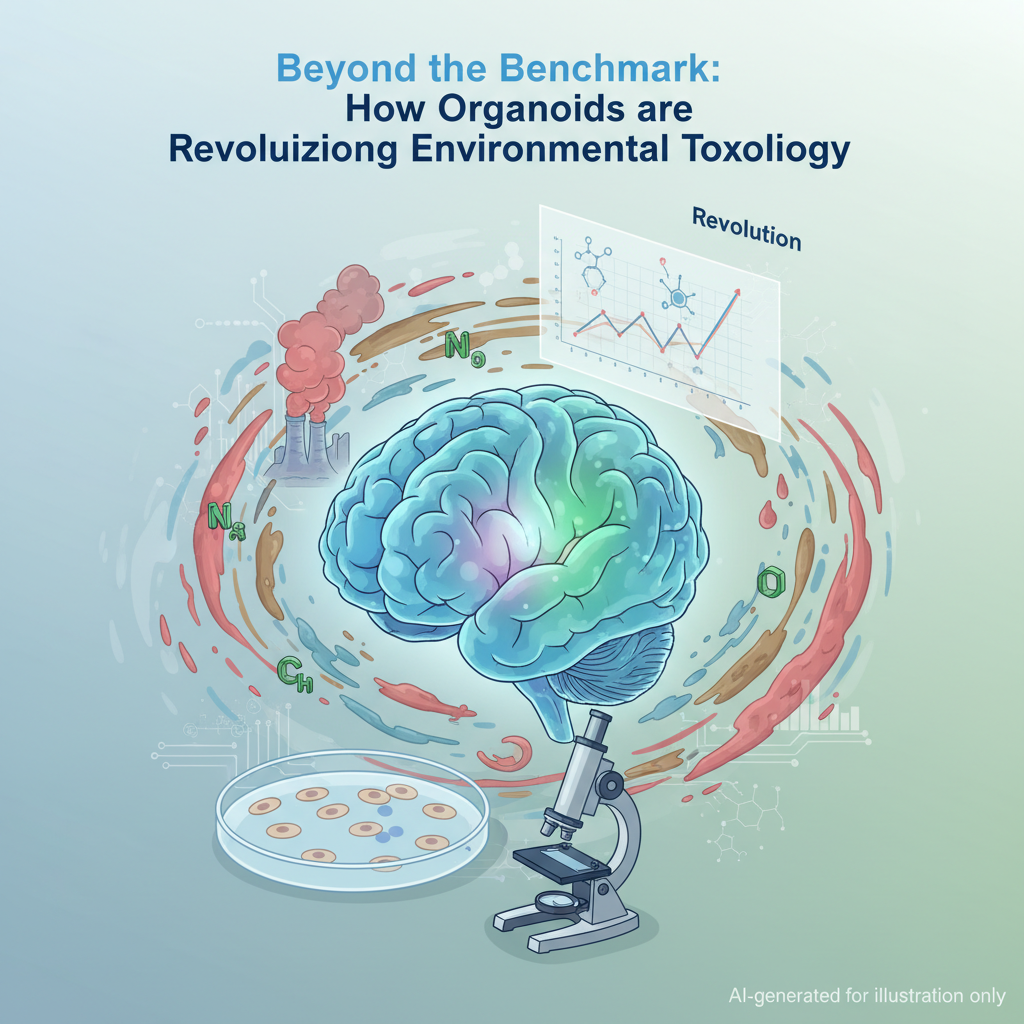
To properly address these intertwined threats, toxicology is undergoing a paradigm shift. Advanced 3D human organoids and organ-on-a-chip technologies are bypassing the translational and ethical limitations of traditional animal testing by offering highly accurate, physiologically relevant platforms. For example, recent assessments utilizing human cortical organoids successfully revealed how a defined mixture of 21 endocrine-disrupting chemicals severely impairs neuronal migration and brain development. As chemical exposures grow increasingly complex, integrating these revolutionary, human-derived models into mainstream toxicology is no longer optional. It is an urgent necessity to accurately evaluate synergistic toxicities and safeguard global public health.
References:
Chengyu Hu, Sheng Yang, Tianyi Zhang ‘Organoids and organoids-on-a-chip as the new testing strategies for environmental toxicology-applications & advantages’ Source Access
Xu Zhang, Chunhong Yu, Peng Wang, Chunping Yang ‘Microplastics and human health: unraveling the toxicological pathways and implications for public health’ Source Access