The AI Illusion

Why Grassroots Research Demands Open-Source Accountability. Generative AI promises unprecedented capabilities in data analysis, but it introduces severe risks for academic research. While large language models can accelerate evidence synthesis, they frequently fabricate plausible-sounding but non-existent citations. The statistical reality is alarming. A recent comparative analysis revealed that when conducting systematic reviews, GPT-3.5 hallucinated 39.6% of its references, GPT-4 hallucinated 28.6%, and Bard reached a staggering 91.4%.
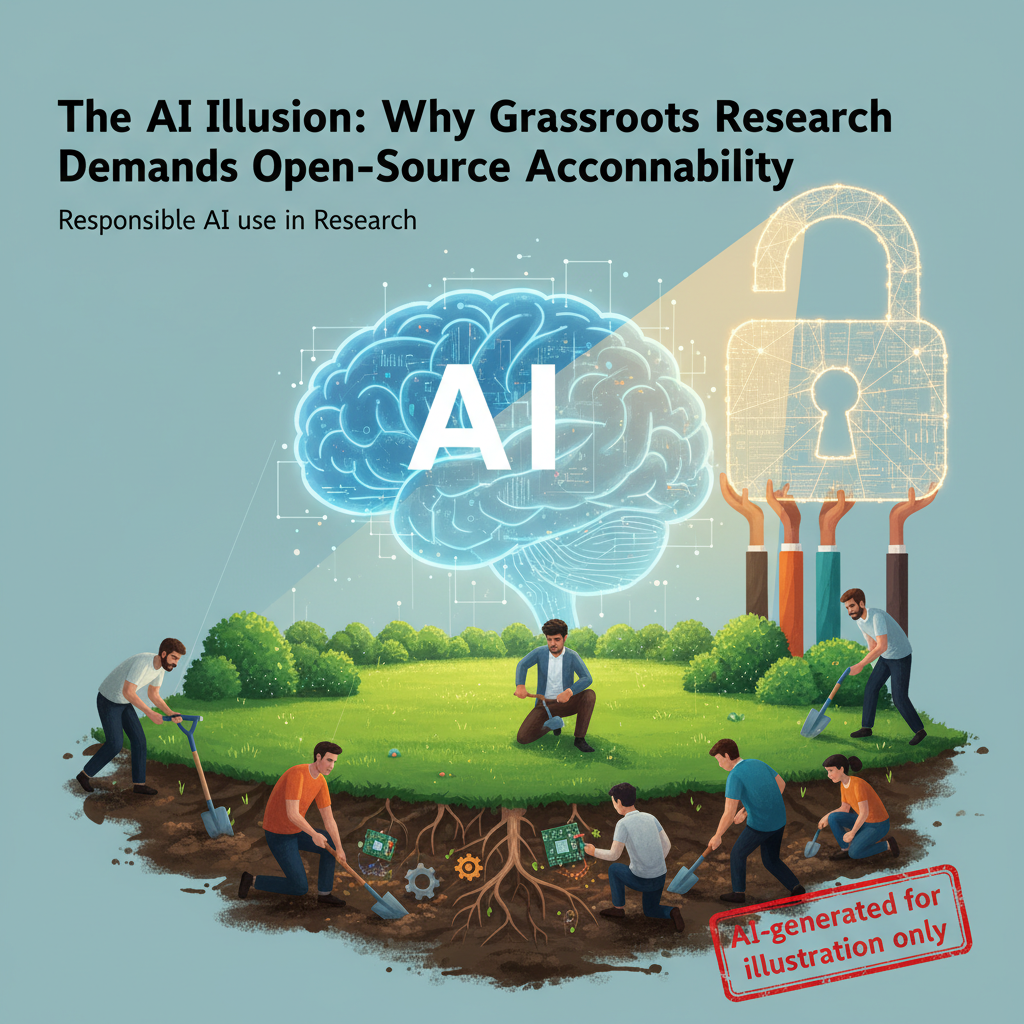
Furthermore, these generative AI tools miss a median of 91% of relevant studies compared to human researchers, making incorrect inclusion decisions in up to 29% of instances and data extraction errors in up to 31% of cases. Because of these exceptionally high error rates, constant human oversight is strictly mandatory. To combat unverified AI-driven workflows, the scientific community requires robust infrastructure. Look out for ResinTox Tools: an upcoming platform specifically dedicated to democratizing grassroots research. By hosting in-house and open source code, applications, and other tailored resources, ResinTox Tools aims to empower citizen scientists to use AI safely. Ultimately, promoting open-source accountability is essential. Countering AI hallucinations will require users of community-driven platforms to ensure that our future research methodologies remain safe, responsible, and rigorously verified.

Chelli, M., Descamps, J., Lavoué, V., Trojani, C., Azar, M., Deckert, M., Raynier, J. L., Clowez, G., Boileau, P., & Ruetsch-Chelli, C. ‘Hallucination Rates and Reference Accuracy of ChatGPT and Bard for Systematic Reviews: Comparative Analysis’
Source Access

Clark, J. et al. ‘Generative artificial intelligence use in evidence synthesis: A systematic review’
Source Access
Revolutionizing Environmental Health

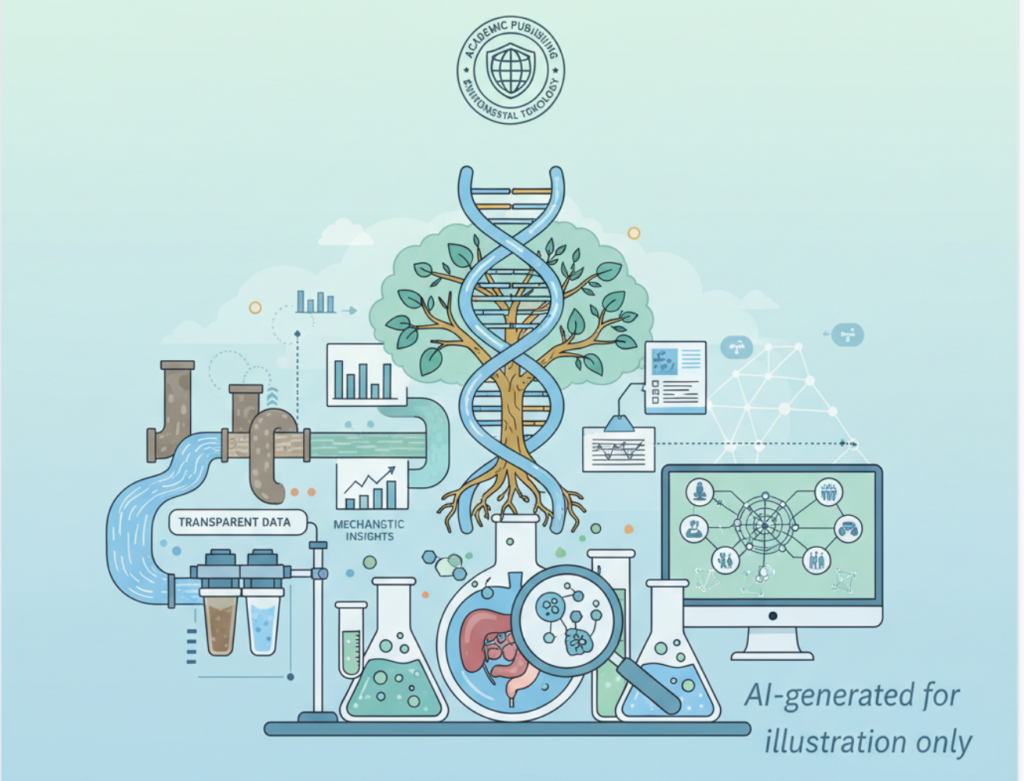
The Rise of Evidence-Based Toxicology. Every year, over 2 million biomedical articles are published, with a recent search for ‘toxicology’ yielding over 27,600 hits. This staggering data deluge necessitates a structured approach to environmental health. Enter Evidence-Based Toxicology (EBT), a revolutionary framework translating the transparent, systematic methodologies of evidence-based medicine into environmental risk assessment. By employing strict protocols like systematic evidence mapping, EBT significantly reduces evaluator bias and strengthens regulatory decision-making.

A major catalyst in this shift is the deployment of New Approach Methodologies (NAMs). Leveraging predictive QSAR models and experimental in vitro data from programs like US Tox21, which encompasses approximately 10,000 substances, toxicologists are establishing rigorous, non-animal testing alternatives. To make this a standardized reality, global networks like the Evidence-Based Toxicology Collaboration (EBTC) are spearheading the harmonization of evidence-based standards. This global cooperation empowers major regulatory bodies, such as the EPA and EFSA, to implement objective, bias-free evaluations. Ultimately, EBT is shaping the future of regulatory science, ensuring that decisions protecting public and environmental health are driven by transparent, systematic, and comprehensive evidence mapping.

Guzelian, P. S., Victoroff, M. S., Halmes, N. C., James, R. C., & Guzelian, C. P. ‘Evidence-Based Toxicology: A Comprehensive Framework for Causation’
Source Access

Hartung, T., & Tsaioun, K. ‘Evidence-based approaches in toxicology: their origins, challenges, and future directions’
Source Access

AlphaFold and Machine Learning

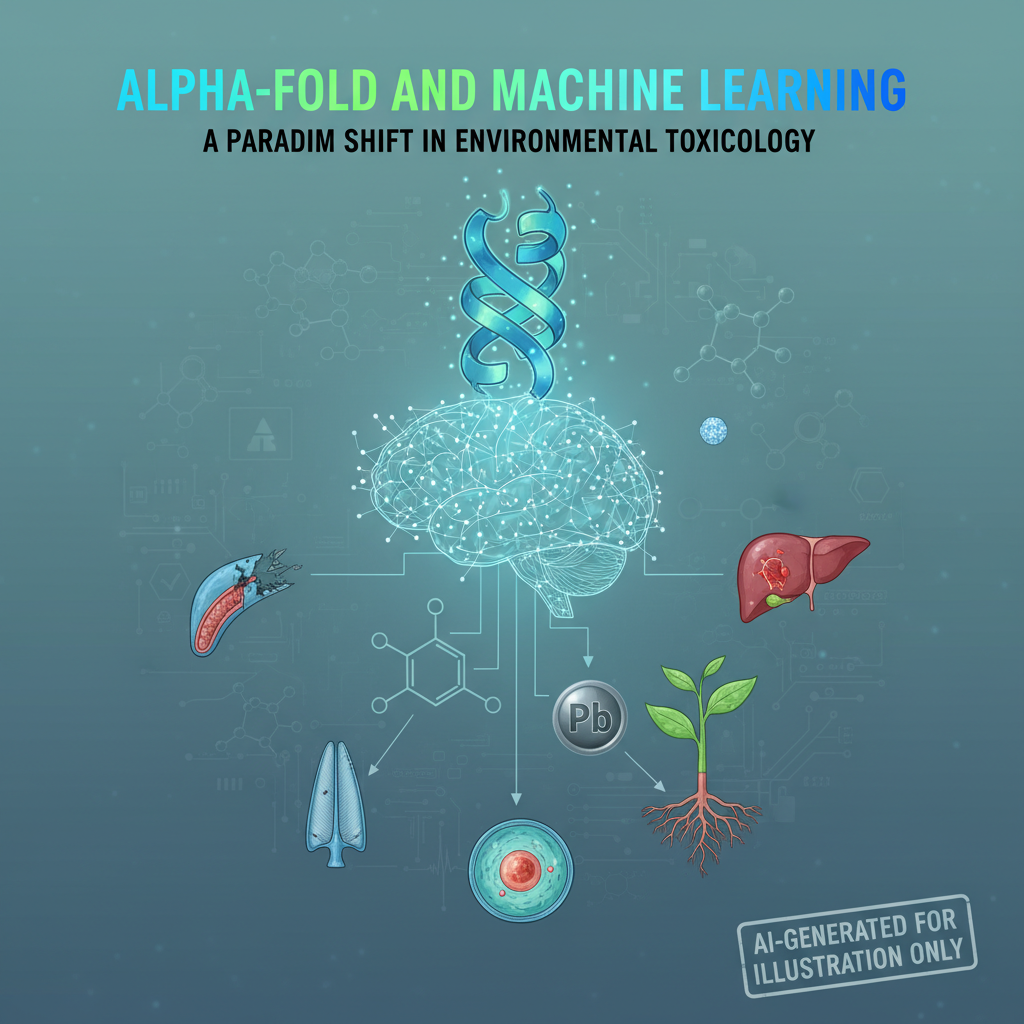
A Paradigm Shift in Environmental Toxicology. Environmental toxicology is undergoing a paradigm shift. For years, researchers relied on traditional homology modeling tools like SWISS-MODEL to predict protein structures. Today, the integration of AlphaFold’s highly accurate ab initio 3D predictions is transforming how we assess environmental risks. A prime example is the screening of endocrine-disrupting chemicals (EDCs). Recent analyses utilizing the zebrafish androgen receptor demonstrate that AlphaFold-generated models offer superior structural stability.

Moreover, AlphaFold-derived MMPBSA binding energies are statistically significant (p < 0.05) contributors to ligand-specific variance when compared to in vitro EC50 values, easily outperforming older techniques. Beyond direct screening, toxicologists are leveraging the expansive AlphaFold-2 database, which houses over 350,000 predicted protein structures, to train novel machine learning pipelines. These computational frameworks accurately quantify 3D protein similarities across diverse species. By mapping cross-species structural alignments, researchers can now optimize the selection of animal models for human toxicity testing with unprecedented precision. Ultimately, the fusion of high-fidelity structural predictions and advanced machine learning is elevating the accuracy of environmental risk assessments, moving the field past traditional limitations into a highly predictive, data-driven future.

Md Adnan Karim, Chang Gyun Park, Hyunki Cho, Annmariya Elayanithottathil Sebastian, Chang Seon Ryu, Juyong Yoon, Young Jun Kim ‘Leveraging AlphaFold models to predict androgenic effects of endocrine-disrupting chemicals through zebrafish androgen receptor analysis’
Source Access

Shreyas U Hirway, Xiao Xu, Fan Fan ‘A novel computational machine learning pipeline to quantify similarities in 3D protein structures’
Source Access

Beyond the Benchmark

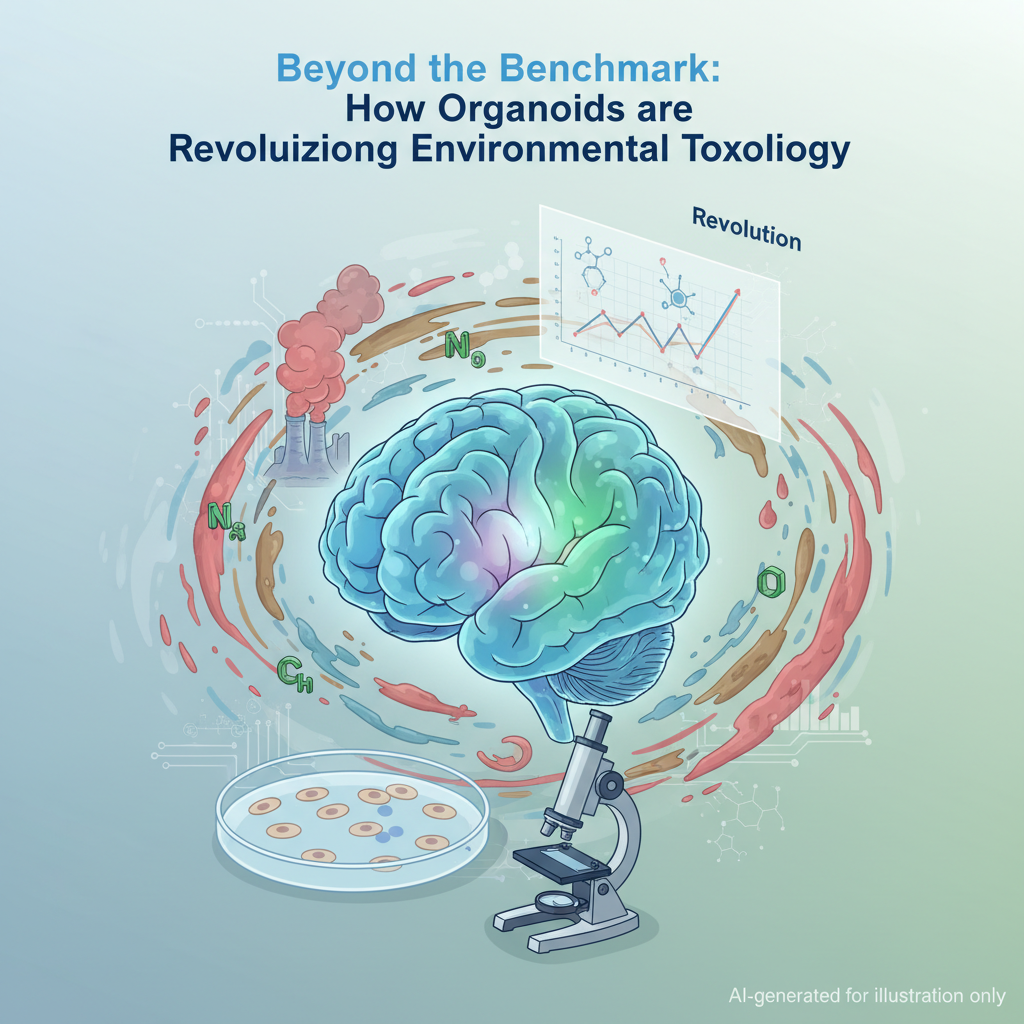
How Organoids are Revolutionizing Environmental Toxicology
Modern environmental contaminants pose an unprecedented threat to human health. Alarmingly, individuals consume up to 52,000 microplastic particles annually through diet alone, allowing these pollutants to penetrate systemic circulation, accumulate in vital organs like the lungs and placenta, and drive chronic inflammation. Exacerbating this crisis is the reality of environmental exposures: we encounter complex, synergistic chemical mixtures rather than isolated toxins. Traditional single-chemical regulatory frameworks struggle to keep pace, as seen in remediation efforts where activated carbon removes up to 98% of long-chain PFAS but captures less than 60% of short-chain variants.

To properly address these intertwined threats, toxicology is undergoing a paradigm shift. Advanced 3D human organoids and organ-on-a-chip technologies are bypassing the translational and ethical limitations of traditional animal testing by offering highly accurate, physiologically relevant platforms. For example, recent assessments utilizing human cortical organoids successfully revealed how a defined mixture of 21 endocrine-disrupting chemicals severely impairs neuronal migration and brain development. As chemical exposures grow increasingly complex, integrating these revolutionary, human-derived models into mainstream toxicology is no longer optional. It is an urgent necessity to accurately evaluate synergistic toxicities and safeguard global public health.

References:
Chengyu Hu, Sheng Yang, Tianyi Zhang ‘Organoids and organoids-on-a-chip as the new testing strategies for environmental toxicology-applications & advantages’ Source Access

Xu Zhang, Chunhong Yu, Peng Wang, Chunping Yang ‘Microplastics and human health: unraveling the toxicological pathways and implications for public health’ Source Access