The AI Illusion

Why Grassroots Research Demands Open-Source Accountability. Generative AI promises unprecedented capabilities in data analysis, but it introduces severe risks for academic research. While large language models can accelerate evidence synthesis, they frequently fabricate plausible-sounding but non-existent citations. The statistical reality is alarming. A recent comparative analysis revealed that when conducting systematic reviews, GPT-3.5 hallucinated 39.6% of its references, GPT-4 hallucinated 28.6%, and Bard reached a staggering 91.4%.
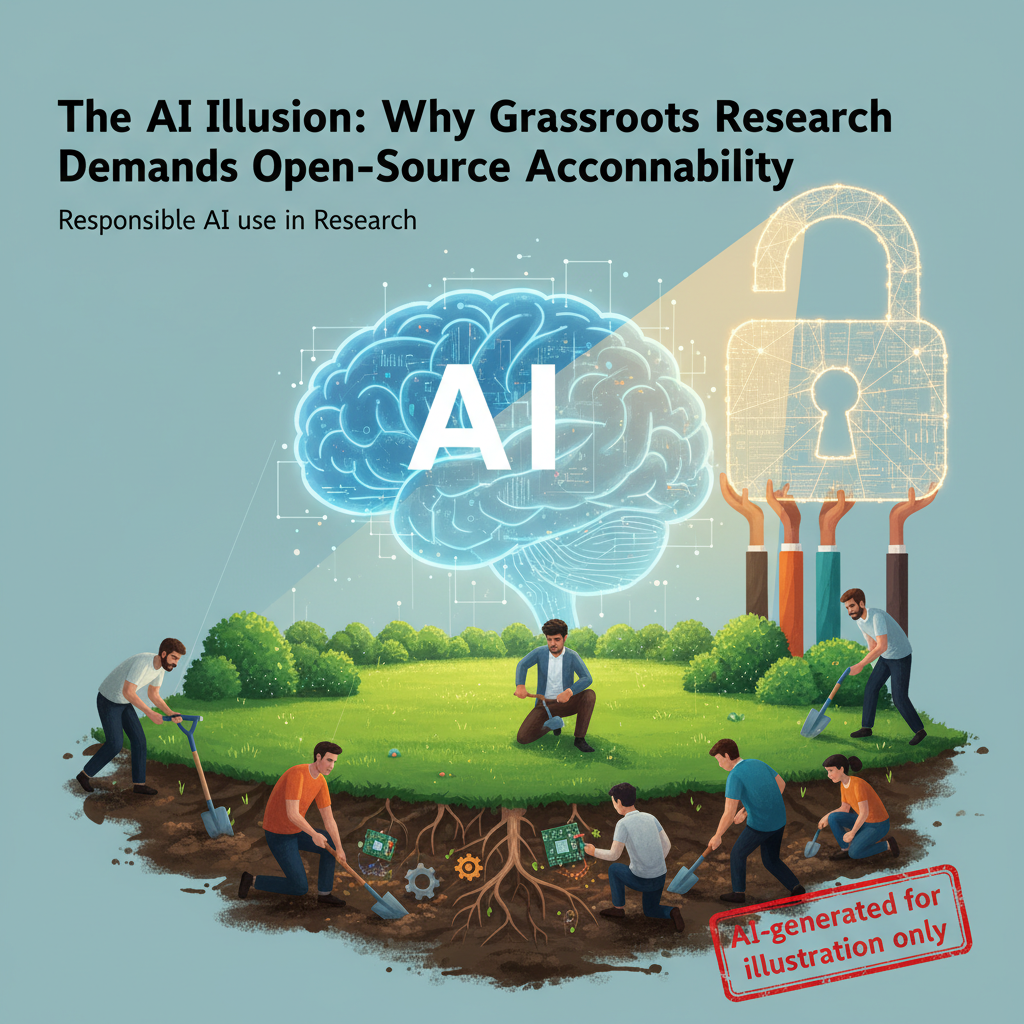
Furthermore, these generative AI tools miss a median of 91% of relevant studies compared to human researchers, making incorrect inclusion decisions in up to 29% of instances and data extraction errors in up to 31% of cases. Because of these exceptionally high error rates, constant human oversight is strictly mandatory. To combat unverified AI-driven workflows, the scientific community requires robust infrastructure. Look out for ResinTox Tools: an upcoming platform specifically dedicated to democratizing grassroots research. By hosting in-house and open source code, applications, and other tailored resources, ResinTox Tools aims to empower citizen scientists to use AI safely. Ultimately, promoting open-source accountability is essential. Countering AI hallucinations will require users of community-driven platforms to ensure that our future research methodologies remain safe, responsible, and rigorously verified.

Chelli, M., Descamps, J., Lavoué, V., Trojani, C., Azar, M., Deckert, M., Raynier, J. L., Clowez, G., Boileau, P., & Ruetsch-Chelli, C. ‘Hallucination Rates and Reference Accuracy of ChatGPT and Bard for Systematic Reviews: Comparative Analysis’
Source Access

Clark, J. et al. ‘Generative artificial intelligence use in evidence synthesis: A systematic review’
Source Access
ResinTox Fallout Predictor

The Fallout Predictor is a pioneering web-based platform designed to model the dispersion of hazardous substances with unprecedented precision. Moving beyond the limitations of legacy software, this application utilises a sophisticated Gaussian-Lagrangian hybrid approach to simulate plumes interacting with complex geographic and urban landscapes. Large volume users are advised to become subscribers to the Open Meteo API-service, as the system will have limited amount of calls per month. With their api key, it is possible to make more predictions (or more playing). For every day usage or testing purposes however, the free tier is usually enough. Chemical data is fetched from PubChem REST API by default, but with your Google Gemini API-Key, it is possible to fetch data for chemicals, compounds and other substances too. Secure API-Key management is handled internally on the client side (Browser).

One of the most impressive features is the real-time integration of OpenStreetMap data, allowing for plume deflection and recursive branching when encountering architectural mass. This provides responders with a far more realistic visualisation than traditional linear projections. Furthermore, the platform is currently in a Limited Time Open Access Beta, offering an interactive Physics Sandbox for users to explore the underlying engine. Do not hesitate to provide feedback, so we can release a full feature application before the end of 2026.

The future looks even brighter with the upcoming implementation of Gemini 3.0 (With API-Key) logic. This AI enhancement will automate chemical property retrieval and provide rapid geospatial population estimates, significantly reducing critical decision-making time during emergencies. Whilst current standards like ALOHA offer basic insights, the Fallout Predictor v2.5.0 sets a new benchmark in emergency readiness and situational awareness. For organisations looking to bolster their safety protocols, this programme represents a vital leap forward in predictive technology.