Why Grassroots Research Demands Open-Source Accountability. Generative AI promises unprecedented capabilities in data analysis, but it introduces severe risks for academic research. While large language models can accelerate evidence synthesis, they frequently fabricate plausible-sounding but non-existent citations. The statistical reality is alarming. A recent comparative analysis revealed that when conducting systematic reviews, GPT-3.5 hallucinated 39.6% of its references, GPT-4 hallucinated 28.6%, and Bard reached a staggering 91.4%.
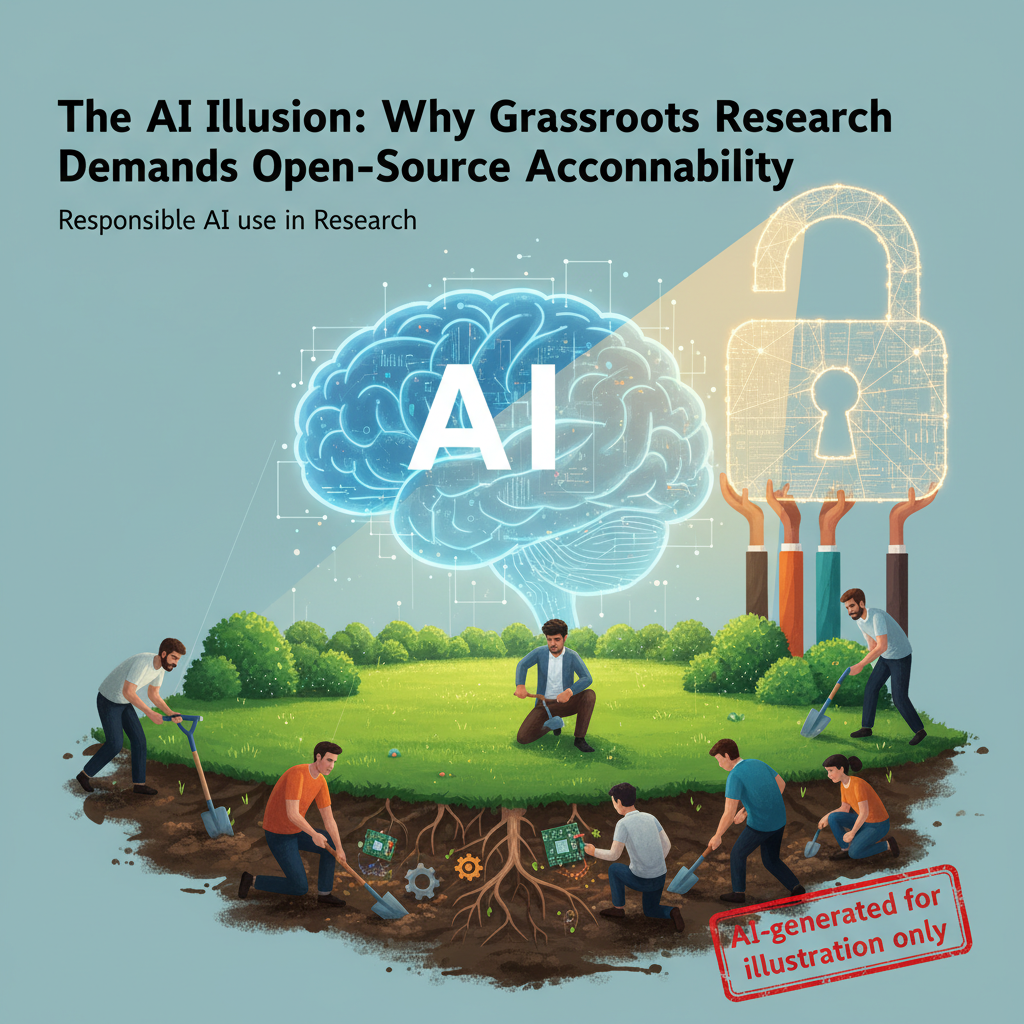
Furthermore, these generative AI tools miss a median of 91% of relevant studies compared to human researchers, making incorrect inclusion decisions in up to 29% of instances and data extraction errors in up to 31% of cases. Because of these exceptionally high error rates, constant human oversight is strictly mandatory. To combat unverified AI-driven workflows, the scientific community requires robust infrastructure. Look out for ResinTox Tools: an upcoming platform specifically dedicated to democratizing grassroots research. By hosting in-house and open source code, applications, and other tailored resources, ResinTox Tools aims to empower citizen scientists to use AI safely. Ultimately, promoting open-source accountability is essential. Countering AI hallucinations will require users of community-driven platforms to ensure that our future research methodologies remain safe, responsible, and rigorously verified.
Chelli, M., Descamps, J., Lavoué, V., Trojani, C., Azar, M., Deckert, M., Raynier, J. L., Clowez, G., Boileau, P., & Ruetsch-Chelli, C. ‘Hallucination Rates and Reference Accuracy of ChatGPT and Bard for Systematic Reviews: Comparative Analysis’
Source Access
Clark, J. et al. ‘Generative artificial intelligence use in evidence synthesis: A systematic review’
Source Access